Music Piano 7: Rush Song Games
Melodya MusesMusic
4.83.14K Reviews
- Version
- 3.10.0
- Installs
- 50.00M
- Age Rating
- Everyone
Screenshots


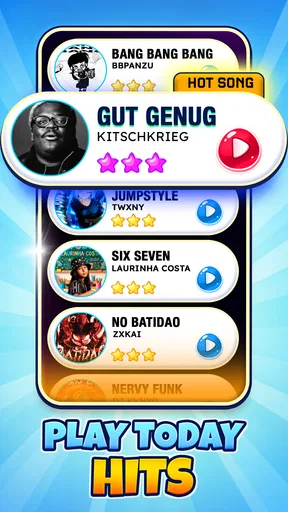
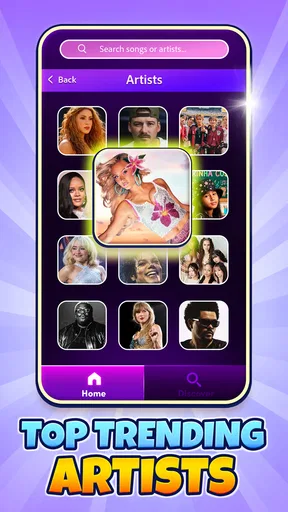

Our Review of Music Piano 7: Rush Song Games
 Analysis by Appyee
When I pick up a phone piano game, I want a quick musical challenge, not a lesson that asks me to set aside an hour or learn an instrument first. Music Piano 7: Rush Song Games is aimed at that casual, tap-along mood: watch the tiles arrive, listen for the beat, and try to keep your timing steady as the song moves along. The appeal is immediate, but the faster passages also make it more demanding than its simple premise suggests.
I see it as a reflex game with a musical skin rather than a piano-learning tool. That distinction matters: it can make a spare moment feel lively and give rhythm-minded players a satisfying target, but tapping tiles is not the same as practicing scales or learning to play a keyboard. If you approach it for what it is, the game has a clear place among lightweight music games. If you expect it to teach piano technique, you may come away disappointed.
How the rhythm feels in everyday play
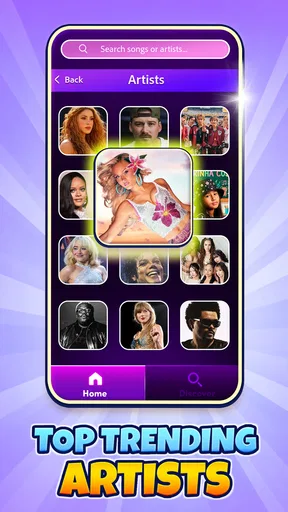
From the moment you fire up Music Piano 7: Rush Song Games, you're greeted by a vibrant interface that screams "let's rock!" The app offers a plethora of songs across various genres, from classical masterpieces to today's chart-topping hits. Whether you're a Beethoven buff or a pop fanatic, there’s something here to tickle your fancy.
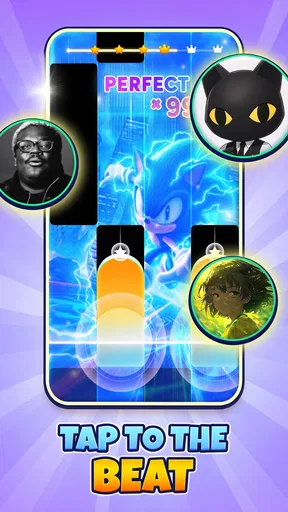
The gameplay is as simple as it is addictive. As the music plays, tiles cascade down your screen. Your job? Tap them in time with the rhythm. Sounds easy, right? Well, don’t be fooled. As you progress, the pace picks up, and it’s a real test of your reflexes and timing. Trust me, it's a challenge that'll keep you coming back for more.
What speed feels like when the tiles start moving
The easiest way to understand the pace is to separate the game’s basic rule from the pressure of executing it. The rule is uncomplicated: follow the descending tiles and tap in time. The pressure comes when the sequence grows brisk enough that you have less room to hesitate, look away, or correct a mistimed tap. That gradual increase in urgency is what gives a short session its arcade-like pull.
I’d start with a song that feels comfortable rather than choosing the most familiar tune and assuming familiarity will make it easy. Knowing a melody can help you anticipate its phrasing, but the tile sequence still asks for visual attention and hand timing. A song you can hum confidently may therefore be trickier than expected if its on-screen rhythm catches you off guard.
For a first attempt, I would hold the phone securely and keep it at a distance where the whole play area stays in view. That sounds obvious, but glancing down at a phone held too close can make the faster sequences feel more chaotic than they are. A steady grip also makes taps more deliberate. When I notice myself stabbing at the screen in a rush, I take that as a sign to reset my posture, not as proof that I need to tap harder.
Heavy-use moments and small-session strategy
This kind of game fits naturally into short breaks: a few attempts while waiting for a ride, a pause between tasks, or a wind-down after work. It does not require the same preparation as sitting at a real piano, and the basic interaction is easy to understand without a long learning curve. I would treat it as a compact burst of focus rather than something to play while multitasking. The tiles demand your eyes, and the soundtrack makes the experience more engaging when you can actually listen.
A useful habit is to choose one modest goal before each attempt. You might focus on staying in time through a difficult stretch, keeping your hands relaxed, or simply finishing a song without looking away. That is more satisfying than measuring every session only by a high score, especially when a fast section catches you out. It also helps make retries feel purposeful instead of repetitive.
For an everyday example, imagine having ten minutes before meeting a friend. I’d use that window for one or two focused runs, then stop rather than rushing through another attempt while walking or crossing a busy area. The game’s visual rhythm makes it poorly suited to divided attention, even if its format feels casual. It is a better fit when you can sit still and give the screen your attention.
Song choice, playlists, and competition
One of the standout features of this app is its customizable playlists. You can curate your own list of favorites to play through, making every session feel uniquely yours. Plus, the app frequently updates its song library, so you’ll never run out of fresh tunes to master.
There is a practical benefit to arranging favorites: it can turn a scattered selection into a deliberate warm-up. I’d put a song that feels manageable first and a more demanding choice later, once my attention is settled. That creates a simple progression without pretending that the game offers formal training. It is also a way to keep a short session from becoming a string of random retries.
Variety is welcome, but a broad song selection does not mean every player will like every arrangement or find every track equally comfortable to play. Familiarity with a song may make the rhythm easier to anticipate, while an unfamiliar piece can put more weight on following the tiles directly. If a favorite track feels difficult, I would not assume the game is responding badly; I would try a calmer run and pay attention to the tile pattern rather than relying on memory alone.
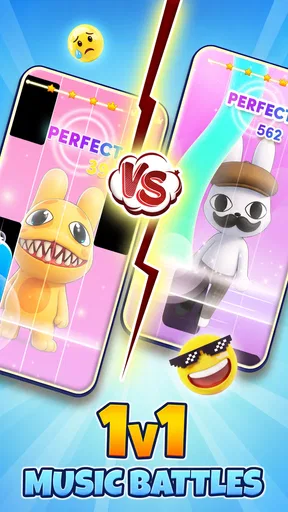
Another cool feature is the multiplayer mode. You can challenge friends or other players around the globe to see who can hit the high score. It’s a fun way to add a competitive edge to your practice sessions and, honestly, who doesn’t love a bit of friendly rivalry?
Competition works best here when it stays light. A friend’s score gives you a clear reason to try again, but chasing a result can also make you tense and less accurate. I’d use a challenge as a playful target, not as a judgment of musical ability. A high score reflects performance in this particular tile-tapping game; it does not tell you whether you can play piano, read music, or keep time in every musical setting.
Reliability, attention, and recovering from a rough run
In a fast rhythm game, reliability is partly about how consistently you can see and respond to what is happening. The animations are described as smooth, and visually clear tiles matter because any uncertainty about the next tap can interrupt the flow. Still, no casual mobile game can remove the human side of missed timing: a rushed finger, a distracted glance, or an awkward grip can all make a run feel less controlled.
If a session feels off, I’d make one change at a time. Settle the phone in your hands, choose a less demanding song, and focus on the beat instead of repeatedly trying to force a better result. This is a useful way to tell whether the difficulty is coming from the pace, your attention, or simply a first attempt that did not go well. It is more practical than treating every mistake as a reason to restart immediately.
I would also avoid judging the game’s responsiveness while playing in a noisy or distracting environment. The music and visual cues work together, so interruptions can make it harder to keep a steady rhythm. Headphones may help you hear the song more clearly if using them is comfortable and safe in your setting, but the screen still needs attention. I would not play while driving, walking through traffic, or doing anything else that needs my eyes and hands.
For players who mainly want a calm listening experience, the escalating pace may be the wrong kind of engagement. This is not background music in the usual sense: once a run gets going, the action asks for active concentration. If you want to relax without watching a screen, a music player or a listening app is a better choice. If you want a low-pressure game, choose a song and pace that let you enjoy the rhythm instead of turning each attempt into a test.
Device fit and practical expectations
The game is free, is rated for Everyone, and is developed by Melodya Muses. It runs on Android from version 7.0, which gives it a broad range of compatibility among Android devices. Its current version is 3.4.0. Those details make it easy to see whether an Android phone meets the stated minimum, though a compatible operating system does not by itself guarantee the same feel on every device.
Screen size and how you hold the phone are more immediately relevant to play comfort than raw specifications. On a smaller display, I’d make sure the tiles remain easy to follow and avoid holding the device in a way that blocks part of the screen. On a larger phone, the extra viewing space can feel helpful, but reaching across the display may be less comfortable if your grip is not secure. A quick test in a relaxed setting is the best way to decide what works for your hands.
Because this is a music game with moving visual cues, I would not assume it is ideal for every accessibility need. Anyone who finds rapid screen motion tiring, has difficulty tracking descending tiles, or prefers audio-only play may want a different way to enjoy music. Likewise, a player seeking a realistic keyboard layout or structured instruction should look at a piano-learning app or a physical instrument instead. The right choice depends on whether the goal is quick reflex play or genuine musical study.
It is also worth setting sensible expectations about the device itself. A game can feel smooth in one person’s hands and less comfortable in another’s because screen size, touch habits, posture, and surrounding distractions vary. I would test a short session before settling in for a long one, especially if fast tapping tends to tire your fingers. Keeping sessions brief is not just convenient; it also helps preserve the playful feel rather than turning the game into a repetitive chore.
Who gets the most from this kind of piano game
If you enjoy rhythm challenges, familiar melodies, and quick attempts that reward concentration, this is the sort of game I’d put on your shortlist. It is especially suited to someone who likes competing with friends, revisiting songs to improve a run, or filling a small pocket of free time with something more active than scrolling. The attractive point is the combination of sound, moving tiles, and immediate feedback from each tap.
It is less suitable for someone who wants a measured, lesson-by-lesson route into piano. The game may encourage attention to rhythm, but it does not replace finger exercises, sheet-music reading, or instruction on an actual keyboard. It may also frustrate players who dislike repeated attempts or become anxious when a game speeds up. Those players are better served by a slower music experience or a learning tool built around deliberate practice.
Compared with conventional piano-learning apps, this one prioritizes quick reactions and game-like competition over teaching musical technique. Compared with a simple music player, it asks for much more attention but gives you something active to do with the song. And compared with other casual rhythm games, the piano-tile presentation is the defining appeal: it makes familiar music feel like a sequence to chase rather than just a track to hear. I’d choose it for energetic play, not for comprehensive musical education.
The game has a 4.8 average from around 270,000 ratings, and it has been installed over 50 million times. That kind of reach suggests the format has broad appeal, though popularity alone cannot tell you whether its pace or song selection will suit your taste. It is a free game for Everyone, so trying it is a low-commitment way to see whether tile-based rhythm play clicks for you.
Features That Hit the Right Note
One of the standout features of this app is its customizable playlists. You can curate your own list of favorites to play through, making every session feel uniquely yours. Plus, the app frequently updates its song library, so you’ll never run out of fresh tunes to master.
Another cool feature is the multiplayer mode. You can challenge friends or other players around the globe to see who can hit the high score. It’s a fun way to add a competitive edge to your practice sessions and, honestly, who doesn’t love a bit of friendly rivalry?
Why You’ll Love It
If you’re like me and love to have a soundtrack to your life, this app is a dream. It’s perfect for unwinding after a long day or energizing your morning commute. Plus, it’s a great way to improve your musical rhythm without the need for a grand piano or formal lessons. Just you, your phone, and a whole lot of fun.
The graphics are crisp, and the animations are smooth, making the overall experience visually pleasing. There’s something incredibly satisfying about nailing a complex song, and it’s a feeling that Music Piano 7: Rush Song Games delivers in spades.
Final Thoughts
So, if you're on the hunt for a way to enjoy music in a hands-on way, Music Piano 7: Rush Song Games could be just what the doctor ordered. It’s accessible, addictive, and loaded with features that make it a must-try for any music lover. So, why not give it a shot? Your next musical obsession is just a download away!
Privacy and Permissions
See what permissions an app requests and how it handles your data.
- Wi-Fi connection information
- view Wi-Fi connections
- Other
- view network connections, full network access, change your audio settings, control vibration, prevent device from sleeping
Verdict
Strengths of Music Piano 7: Rush Song Games
- Intuitive interface for all ages.
- Wide variety of popular songs.
- Offline mode available.
- Customizable themes and layouts.
- Interactive tutorials for beginners.
Limitations of Music Piano 7: Rush Song Games
- Contains in-app ads.
- Limited free song selection.
- Requires internet for updates.
- Occasional lag on older devices.
- High battery consumption.
Similar Picks in This Category
View All
Tiles Hop Music & Ball Game
AMANOTES PTE. LTD.4.3

Magic Tiles 3™ - Piano Game
AMANOTES PTE. LTD.4.6

Real Piano
Bilkon3.7

Piano Game: Classic Music Song
Dream Tiles Piano Game Studio4.0

Smash Colors: Music Ball Rush
BADSNOWBALL HONGKONG LIMITED4.2

Piano Music Go-EDM Piano Games
Joy Journey Music Games4.5
Frequently Asked Questions
What is Music Piano 7: Rush Song Games, and how does it work?
Music Piano 7: Rush Song Games is an engaging rhythm-based game where players tap on tiles in sync with popular songs. The game challenges your timing and reflexes by requiring you to match the rhythm of the music accurately. As you progress, you can unlock new songs and increase the difficulty level, providing endless entertainment for music lovers.
Is Music Piano 7: Rush Song Games free to play?
Yes, Music Piano 7: Rush Song Games is free to download and play. However, it does offer in-app purchases and optional ads. These purchases can enhance gameplay by unlocking additional songs or removing ads, but they are not necessary to enjoy the core experience of the game. Players can still access a variety of features without spending any money.
What types of songs are available in Music Piano 7: Rush Song Games?
The game features a diverse selection of songs across various genres, including pop, classical, and electronic music. Players can enjoy both contemporary hits and timeless classics. The library is frequently updated, ensuring there's always something new to play. This variety caters to different musical tastes, making the game appealing to a broad audience.
Does Music Piano 7: Rush Song Games require an internet connection?
Music Piano 7: Rush Song Games can be played offline, allowing you to enjoy the game without an internet connection. However, some features, such as downloading new songs or accessing certain updates, may require an internet connection. Playing offline ensures you can enjoy uninterrupted gameplay, which is perfect for traveling or areas with limited connectivity.
Is Music Piano 7: Rush Song Games suitable for all ages?
Yes, Music Piano 7: Rush Song Games is designed to be enjoyed by players of all ages. The game features a simple, intuitive interface that is easy to navigate, making it accessible for younger players. Additionally, its content is family-friendly, with no inappropriate material, ensuring a safe and enjoyable experience for everyone.
Play our best games!


